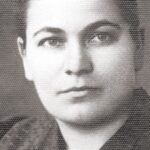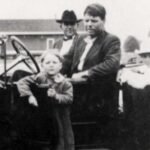

Ada Blackjack Johnson (born as Ada Deletuk) was born near Nome, Alaska, and was the mother of a sick son, Bennett, the only one of her three children to survive infancy. Desperate to provide for his treatment, she joined an Arctic expedition to Wrangel Island, north of Siberia in 1921. While on the island, she faced life-threatening conditions and emerged as the sole survivor.
Born in 1898, she was raised in a Methodist mission school, where she learned to read, write, sew and basic housekeeping skills, eventually becoming a seamstress. Before that, she lived with both parents, but her father later died from food poisoning after first eating meat that was too old and then eating fresh meat afterward. She was just eight years old when he died, leaving her mother to care for her and her younger siblings.
In 1918, a flue epidemic ravaged Spruce Creek, a remote settlement near Solomon, Alaska, where Ada Blackjack was born. She survived the outbreak. Shortly after losing their father, she was sent to the Methodist mission school for shelter, where they took her in. While there, she was taught practically everything needed for a woman to know, except to hunt or trap or build shelters.
At age 16, she was married to a notorious hunter and musher named Jack Blackjack. However, by the time she was 22 in 1921, they had already divorced. She had 3 children with him while they were married, but things wasn’t rosy at all. Early in the marriage, Jack would beat her brutally and starve her, according to the book by Jennifer Niven’s, Ada Blackjack: A True Story of Survival in the Arctic (available on Amazon). She also lost two of her sons to death at infancy, with Bennett being the only survival.
After the divorce, her husband abandoned her, leaving her so poor that she could no longer care for herself or her son. Her only option was to return to her mother in Nome, and because Bennett suffered from chronic tuberculosis and needed more care than she could provide, she placed him in an orphanage so he could receive food, shelter, and medical care. Her desire to earn enough money to regain custody of her son and fund his full recovery was a major reason she agreed to join the ill-fated Wrangel Island expedition.
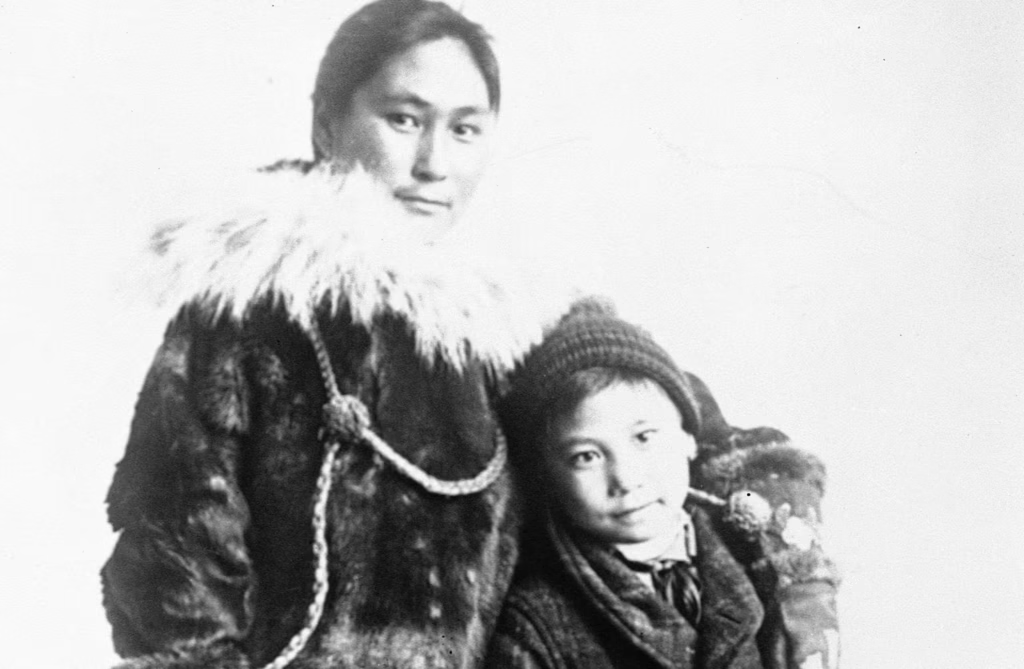
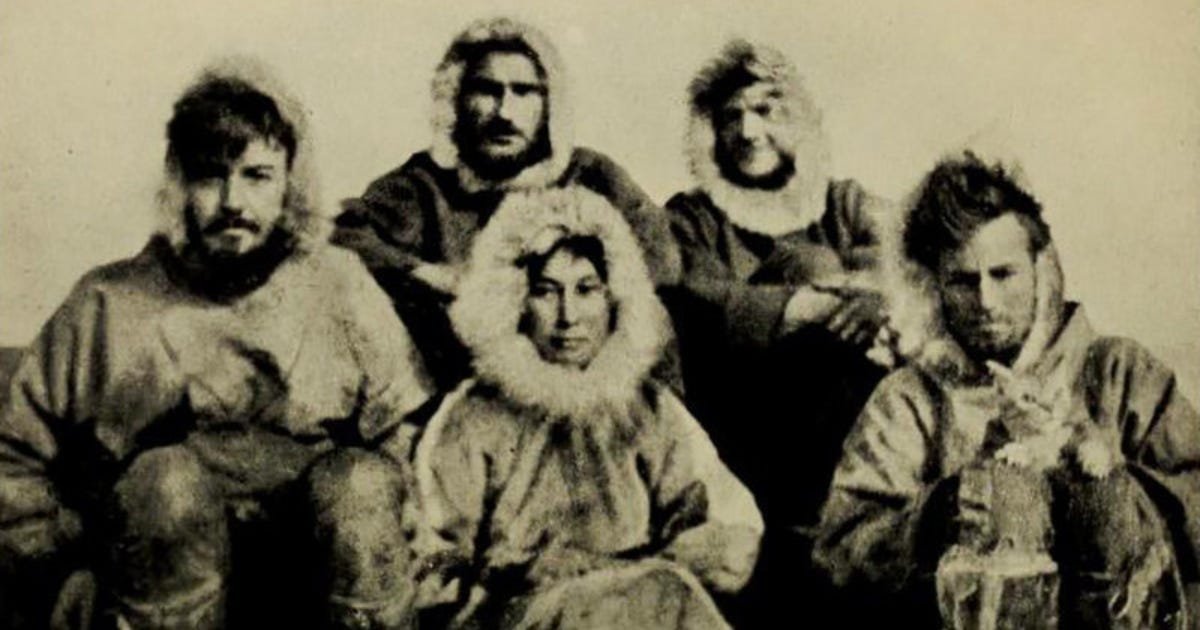
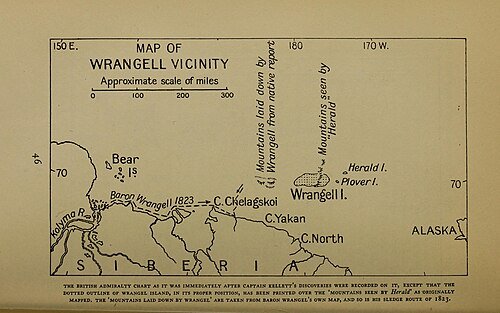
Her hunt for work first took her to a job of sewing for the miners in her town, but the pay was so small that she knew it wouldn’t be enough to take care of herself and her son, Bennett. Then came a new job opportunity that was mouthwatering but risky: the expedition to Wrangel Island. An Island which Vilhjamur Stefansson, a Canadian explorer believed should be claimed by the British as a future air base, weather station, or whatever they deemed fit. For this, he hired four men — Milton Galle, 19; Allan Crawford, 20; Fred Maurer, 28; and Lorne Knight, 28 — to embark on the mission. He also gave them instructions to hire Inuit families to help hunt, cook and make clothing for them. But none of the Inuit families would agree to go. They thought it as too risky except for Ada Blackjack, who needed the money so badly. She would earn $50 a month working as a seamstress.
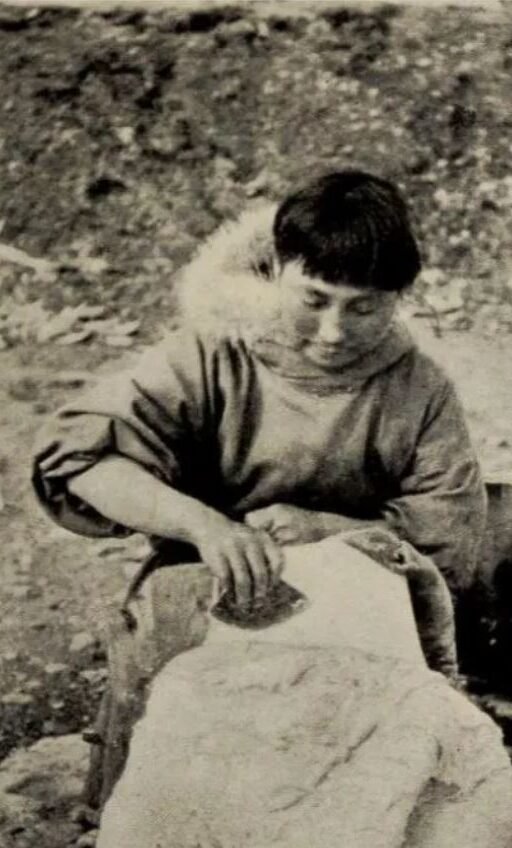
On September 16, 1921, they arrived at Wrangel Island — the four men, Ada Blackjack, a female cat named Vic (Victoria), and the seven dogs the men had purchased in Nome. On arrival, the men were celebrating their acquisition of the Island, but not the same for Ada. She was filled up with loneliness and fear, scared of being so far off her home and with strangers. Thoughts of this overwhelmed her that she even started crying and wanted to return back with the departing Silver Wave. But then she said to herself, “If I turn back, who is going to sew for them? I promised them I would sew for them, and I must keep my word.” And with time, they all got along with each other.
The Island itself was a mixture of wildlife: foxes, walrus, polar bears, owls, terns, and ravens. Yet, the men loved every sight of it. Right away they began hunting for a kill, except for Ada who was frightened at the sight of weapons of any kind — especially guns. She never attempted to hunt.
By September 20, 1921, they saw the first flakes of snow, after not seeing any when they first arrived. And with time, the snow began to fall heavily. Ada would continue to sew clothes for them for the weather. In November, one of their best dogs, which they named Snowball died, leaving them with just six to finish off the expedition.
On one surprisingly awkward day, Ada had slipped from the group. With no sight of her, the men immediately went looking for her, only to find her with a poison, trying to take her life. The reason? She was afraid of Lorne Knight. When she saw him sharpening his knife earlier in the morning hour, she assumed he was going to use it on her.
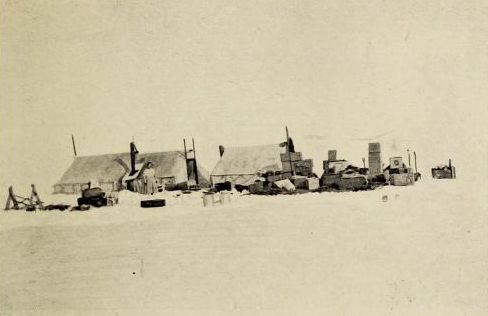
On arrival the team had several months of supplies, but as time passed those supplies began to ran out. As June and July approached, the men and Ada grew excited, knowing the ship was supposed to arrive soon. Instead, quite the opposite happened. Stefansson struggled to raise funds for the relief effort. He had to appeal to the Canadian government for humanitarian aid of the sum of $5,000, which he intended to add to the $3,000 he had received from his friend, Orville Wright. But $3,000 was what the Canadian government was willing to give him, nothing more.
With those funds in hand, Stefansson made arrangements to take supplies to the men and Ada asap. On August 12, 1922, the ship intended to deliver supplies to them set sail. But the ship never arrived, as they were held back by the enormous ice, forcing them to return back to Nome. Desperation began to set in.
Because their supplies were running dangerously low and they had no sign that help would arrive, Crawford, Galle, and Maurer decided to leave the camp and try to reach Siberia for assistance. They did not realize how severe Knight’s scurvy had become, as he remained hopeful he would recover. The three men set out with their exhausted, starving sled dogs across the harsh, icy terrain. But they never returned, and no one ever heard from them again.
For eight months, Ada Blackjack had to survive by herself with an already critically ill Lorne Knight, who could barely do anything but lay on his sleeping bag. So she learned how to trap foxes, gathered driftwood and chopped it for fireword, and taught herself to shoot so she could bring in geese and seals for food. She even built two small boats from driftwood, canvas, and animal skins — skins she had hunted, dried, and sewn herself — to make hunting easier.
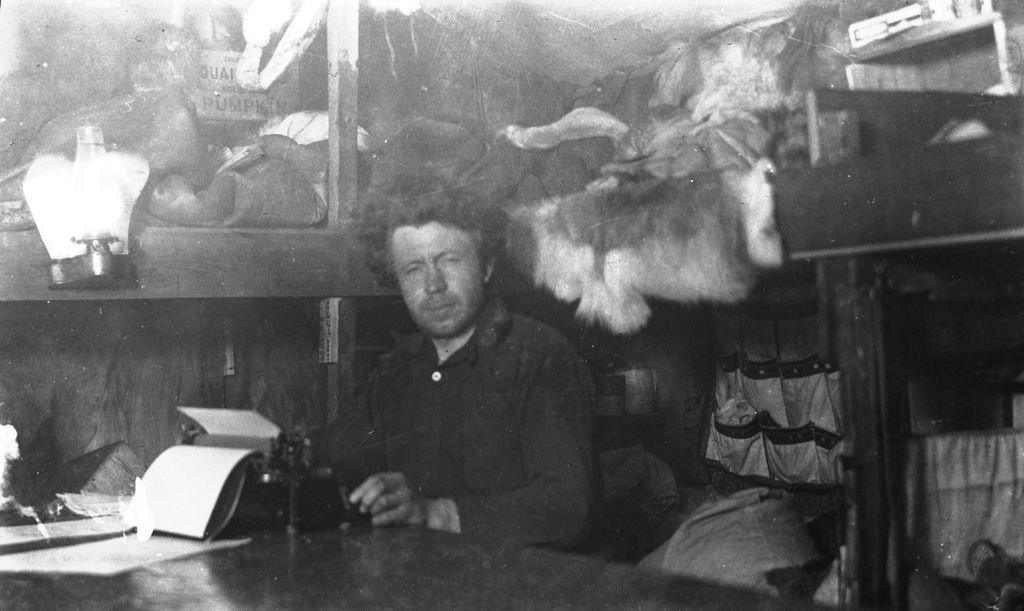
But with Knight critically ill, you would think he would be nice, but no. No matter how much Ada tried, Knight grew more frustrated with her. His illness changed his moods, swinging from sad to quiet, and from calm to irritated. As his condition got worse, so did his temper. He accused Ada of not doing enough, of failing to bring in the fresh meat he needed. He called her lazy, careless, even stupid, and the criticism never seemed to stop. She knew she was getting on his nerves, but she felt powerless to change things. She was sick herself, though she didn’t yet know it was the early stages of scurvy. She felt exhausted, weak, and discouraged. The workload was heavy, she was worn down, and Knight’s constant complaints pushed her past her limit. Eventually she snapped back at him, and the two of them fell into a tense silence — something even harder to bear than their arguments.
One particular morning, she woke up with a nearly swollen closed eye, which got bad the next day. She did all she could to heal herself, and for the next two days started seeing improvements. By this time, her thought was that she was going to die, and so she wrote in her journal this words, “If anything happen to me and my death is known, there is black stirp for Bennett school book bag, for my only son. I wish if you please take everything to Bennett that is belong to me. I don’t know how much I would be glad to get home to folks,” in hopes that if ever a ship arrives, they might take it to her son.
On June 23, 1923, Lorne Knight died — the moment Ada Blackjack had long feared. With the other men gone, she found herself alone on Wrangel Island, surrounded only by the wild: foxes, seals, and the ever-present threat of polar bears.
By this time, Stefansson made another plan to send a ship called the Donaldson to send fresh supplies to them again after the previous attempt failed. He instructed them to take with them some indigenes, the Eskimos with them. On August 20, 1923, they finally arrived at the Island, but found just one human, Ada Blackjack as the sole survival. On catching sight of them, she immediately ran and throw herself into the water to get quickly to the ship. When Ada boarded the rescue ship, she immediately asked about Crawford, Maurer, and Galle — the three men who had left months earlier to seek help. The captain was taken aback by her question, since he had expected to find all four members of the expedition still on the island.
Despite becoming known for her survival story, life never got much easier for Ada Blackjack. Her son Bennett, who had recovered from tuberculosis as a child, lived with serious health problems for the rest of his life and died at 58 in 1972. Ada, unlike Stefansson and others involved in the expedition, never earned real money from what happened on Wrangel Island. She was paid very little for her work and received no royalties from the book he wrote The Adventure of Wrangel Island (published in 1925), even though Stefansson used parts of her diary.
Newspapers later printed allegations — originating from her rescuer, Harold Noice — that she had failed to care for Knight properly. Knight’s family, who grew close to Ada afterward, strongly defended her, and the accusations were widely dismissed, though it isn’t confirmed that the papers ever formally withdrew them. The criticism hurt her deeply, and she chose to avoid reporters for almost 50 years, which contributed to her fading from public attention.
Ada remarried twice and had another son, Billy. She nearly died from tuberculosis herself, lived much of her life in and out of poverty, and spent her later years quietly in Alaska, working with reindeer, gathering berries, and hunting and trapping. She died on May 29, 1983, in Anchorage at the age of 85 and was buried beside Bennett.
If you’d like to read more about her and everything that happened on the Island and after the expedition, Jennifer Niven’s book, Ada Blackjack: A True Story of Survival in the Arctic, available on Amazon, is a great read.