
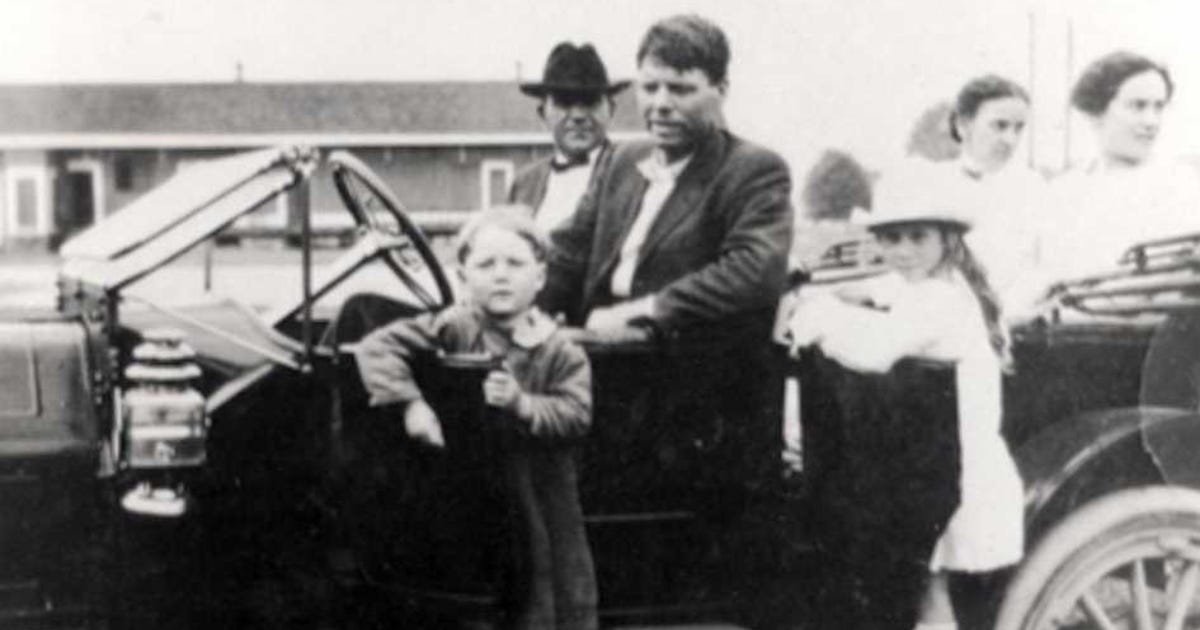
Bobby Dunbar went missing on August 23, 1912. The 4-year-old disappeared while on a fishing trip with his family at Swayze Lake in St. Landry Parish, Louisiana, owned by his mother’s uncle.
Toward the end of the morning, his father, Percy Dunbar had to attend to business. As he was leaving, Bobby wanted to join him, but the father refused. Turning toward the boy who came to deliver the information about the business, he asked him to take Bobby with him back to the camp.
Back in the camp, he saw Paul Mizzi, a family friend who had also come for the fishing trip, and decided to tag along. Everything was going fine until Bobby was nowhere to be found. It was now time for them to recline at the table for a meal before his mother observed he was the only one missing among them.
No one had any idea of where he must have gone. So they began searching for him. Thinking he must have gone to his father, they hit the road, calling loudly at his name. On their way, they met up with his father and broke the news to him. On hearing this, he immediately raced back to the camp, and on reaching found his wife, Lessie on the ground devastated. After being filled in with more details, Percy quickly joined in the search.
From the other search party who went away from the camp, two returned back to the camp to make another try there. After heading north along the trail, they turned south and found small, bare footprints pressed into the dirt. They didn’t know if the tracks were Bobby’s or whether he had been barefoot. Calling out to the parents, the mother took with her Bobby’s sandals from the ground to match with the footprints, and suspected it to be Bobby’s, as no other kids were without sandals.
With that, they all followed the footprints to see if they could locate him, but to no avail. It wasn’t long when others who were complete strangers joined in the search to help Percy and Lessie find their boy. Still, it was all in vain. Bobby was nowhere to be found.
With no progress, the searchers thought to themselves that he must have drowned or killed by the wild animals or if he had ended up in the water, a large garfish might have preyed on him. They even thought of a possible kidnap, as that was their strongest bet. With the conclusion of a possible kidnap, they right away put up a thousand dollars reward for whoever that’ll find Bobby and return him back to his parents.
They described him as four years and four months of age, solidly built but not overweight — with large round blue eyes, light hair, and very fair skin with rosy cheeks. His left foot had been burned in infancy, leaving a scar on the big toe, which is slightly smaller than the one on his right foot. He was wearing blue rompers and a straw hat, and he had no shoes on. His full name was Robert Clarence Dunbar.
On August 30, 1912, the offer rose from a thousand dollars up to $10,000, which was published on the headline of a newspaper. The search had gone national, due to several eyewitnesses who had claimed to have seen someone resembling Bobby in the custody of a traveling Italian woman. But by the time the search wasn’t bearing the needed result, they accepted the idea to hire a private agency called The William Burns Detective Agency to continue with the hunt, who then offered $6,000 as bounty to whoever would help them find the boy.
With efforts intensified, on April 1913, eight months after Bobby was lost, he was reported to have been found. But was he indeed the real Bobby?
On April 1913, a woman named Mrs. Conerly and her neighbors who lived in Mississippi, had suspected of a man named William Cantwell Walters, who they believed was holding Bobby in hostage, sent a message via a telegram to the boy’s parents. Days later, they sent pictures of the boy who had a striking resemblance to the one being searched for. Meanwhile, when Mr. Walters was asked about the boy’s parents, he would give different answers to the question to both neighbors and the authorities, which made him a prime suspect, as the neighbors would report of the boy being maltreated constantly by him.
After constant interactions and exchange of information between both parties: Mrs. Conerly and others and Bobby’s parents, it was discovered that the descriptions from both sides was so much in sync. With all of these details coming together, Walters was held in custody by the police for interrogation, but waiting for the Dunbars to arrive first.
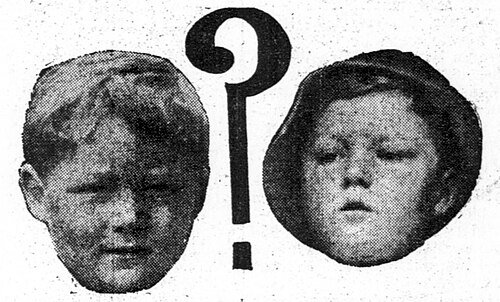
However, after two days of being held, and with no word from the Dunbars, Walters was released and sent away. But just after his release, word came from Percy, Bobby’s father to keep him in custody. Mr. Walters had already gone and no one knew where he was headed. This meant the officers would have to carry out another hunt to get Walters back into their custody. So they did. Carrying out a chase, they finally apprehended Mr. Walters at Newsom, Mississippi, with the boy safely with them.
With Percy finally getting to meet the boy and calling him by his supposed name “Bobby”, the boy couldn’t recognize him. Everyone was puzzled but still believed that maybe he was traumatized by all the beatings he had received from Walters, and secondly, for being far away from his parents for so long, he must have been brainwashed not to remember them again. To them, it was understandable. However, what really convinced Mr. Percy of the boy being his son was the striking resemblance, the voice, the way he talked and one word that Bobby often referred to an object that this new boy also called.
But Lessie, Bobby’s mother, on her part had her doubts. She wanted to see and examine the boy herself. When she finally did see him, she wasn’t convinced with the boy’s eye matching that of Bobby’s just like the feeling the father had, was also certain his voice didn’t sound like that of her son’s unlike the father who believed it did, except for the scars she could see on him.
On a later note, when he became calmer and eased from the trauma of the incidents, he’d called her “Mamma.” But Mr. Walters insisted he wasn’t their son and that he was innocent of the accusation of kidnapping. He argued that the boy would call any lady who wasn’t too old “Mamma,” and if the lady was indeed old “Grandma.” Even mentioning that he had called him “Papa” himself.
To prove this, he mentioned quite a few names of those who knew him and the boy prior to the missing of Bobby in Poplarville, where they had lived for a short period of time. Although stubborn and hesitant of saying who the parents of the boy was at first, started spilling the beans. He mentioned that the boy’s name is Bruce, a son of a woman named Julia Anderson, he doesn’t know his father, and that the boy was about three years old when he had custody of him.
Mr. Walters was extradited from Mississippi to Louisiana for trial. Meanwhile, his attorneys were making efforts to come up with witnesses who had seen him with the boy (Bruce), before the disappearance of Bobby, with many testifying that they indeed had seen Bruce with him before the disappearance of Bobby on August 13, 1912.
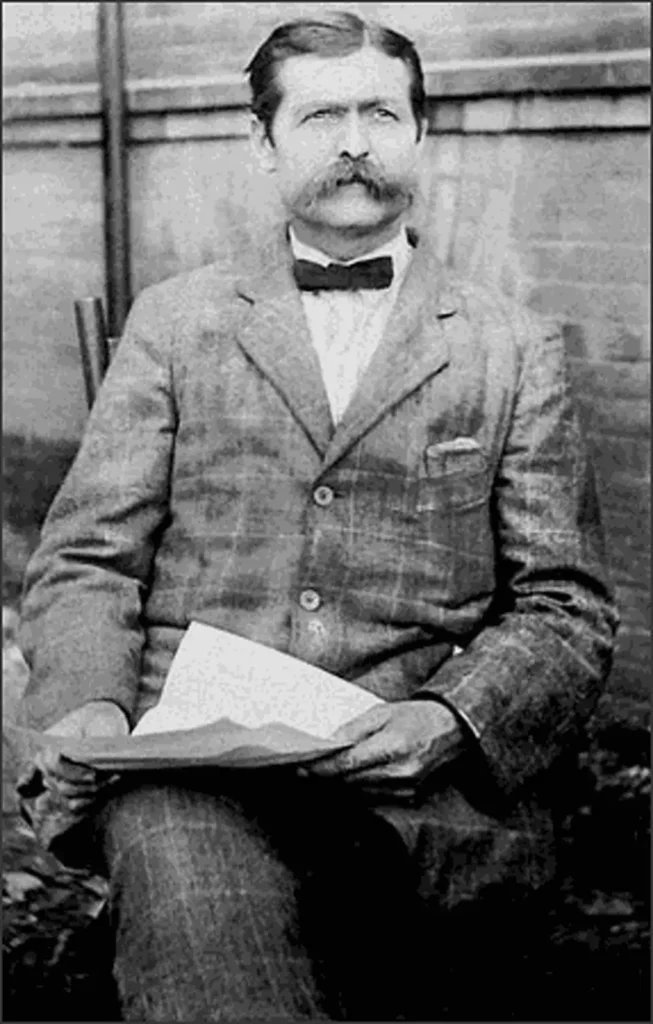
His claim that the boy’s mother was Julia Anderson, had drawn attention to her which by now required her to describe the identity of her son, Bruce and how he ended up with Mr. Walters, which she did. In her affidavit, she mentioned how William C. Walters left with her son in February 1912, saying he only intended to take the child for a short visit to his sister’s place, to which she agreed to. But since then, she hadn’t seen her son, and said she hadn’t handed him full custody of the boy.
In her description of Bruce, she said he was born on December 18, 1907, at the home of her sister, Mrs. Gilford Bass, to a man named Jim Cowan, a shoe drummer. “The boy has no marks upon him by which he could be identified,” she says, but that he “had a small red speck in the corner of his right eye,” and a marking on his right foot. Elaborating on the speck, she mentioned that it disappeared when he got to three years of age. Have dark blue eyes, very light hair, fair skin, and was a sturdy, healthy child. However, in contrast of her affidavit, the boy now in question and in the custody of the Dunbars has identifiable marks. Could he have been the missing Bobby or the Anderson’s own Bruce? No one could tell except for the Dunbar’s family physician, Dr. Shute, who had witnessed the birth of Bobby.
He examined the boy’s foot and saw that the scar he had treated three years ago, had actually faded. He then went on to his genitalia and saw the deformity he had previously seen in the missing Bobby’s genital. But to put all doubts to bed, Julia requested to see the boy herself just as did Mrs. Dunbar. Her wish was granted, but with a trick.
On the day of her cross-examination of the boy, three boys was planned to be presented to her to identify her son, Bruce, however she was presented with two with the boy withdrawn from among them. Immediately she rejected either of them as her son, a man in the crowd spoke up that she couldn’t recognize her child. But he wasn’t there.
The child was subsequently brought up to her. On catching sight of him, she recognized him and called him by his name, but he didn’t respond. Rather he slapped at her hands and ran away — a similar fight he had previously pulled up with Mrs. Dunbar when he first met her. But here’s the sad part. On her request to get more information about the boy if he was the one with the Dunbars, no one would tell her anything. They rather wanted her to figure everything all by herself.
Once the cross-examinations were completed, the case proceeded to trial, and all available witnesses were called by both the defense counsel and the prosecuting counsel. By now, Julia Anderson had fallen critically ill, requiring her to go through an operation.
Just a day after her operation, she was called upon to stand as a witness, carried on her sickbed. Few questions were asked her to ascertain if she was able to testify due to her condition, of which she could barely be heard as she was very weak to speak. They had to come close to her to hear her talk instead. It wasn’t long that they began to question her character. Her affair with a man named Elisha and the death of her first child, and then her affair with Jim Cowan and the birth of Bruce, then with Bunt and giving birth to Bernice, as well as the death of her last baby, which she was accused of killing by strangulation.
After a long trial, it was now time for the verdict. William Cantwell Walters was declared guilty of his charges. Three Jurors out of twelve had voted against a death penalty, with the other nine insisting on a death penalty. However, hours later, it was just one person who was still adamant of a death penalty. But he too let go of his stance a while later. Instead, he was sentenced to life imprisonment. And despite all the witnesses of Poplarville who came out to testify of seeing Bruce with Walters during their stay before the disappearance of Bobby, the court gave the verdict that the boy was in fact Bobby Dunbar, and remained in the custody of the Dunbar’s for the rest of his life. Later in his life, he got married, had four children, and a gas station. He died at the age of 58 on March 8, 1966, as a result of heart attack.
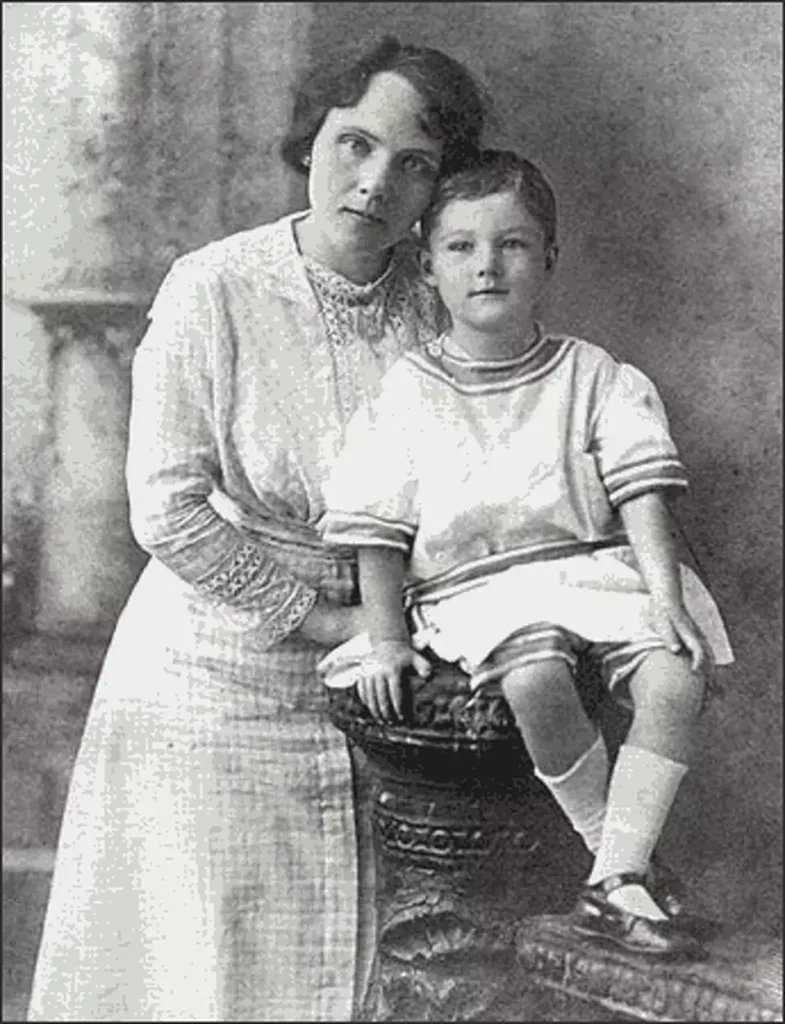
Walters on his part remained in prison for two years until an appeal overturned his conviction on the ground of technicality. The state declined to re-try the case, and he was freed.
For Julia Anderson, she was happily received by the people of Pearl River County in Poplarville, the same people who had taken care of her son and was fond of him while he was in their midst. They took her in and proudly took care of her. In time, she got married and gave birth to seven children. It was said that after settling down, she did everything within her power to legally get Bruce back, but soon saw it fit to let go.
Decades later, in 1999, Bobby’s granddaughter Margaret Dunbar Cutright began researching the case and in 2004 convinced her father, Bobby Dunbar Junior to take a DNA test to see if it matched that of his supposed cousin, the son of Alonzo Dunbar. The results showed there was no genetic match. It was now proven to everyone and the family members involved that the boy returned in 1913 was not the real Bobby Dunbar. Still, the real Bobby’s fate remains unknown. Cutright, however, believed he must have fallen into the lake and must have been eaten by an alligator.
1n 2012, she and Tal McThenia published A Case for Solomon: Bobby Dunbar and the Kidnapping That Haunted a Nation, a detailed account of the Dunbar case.